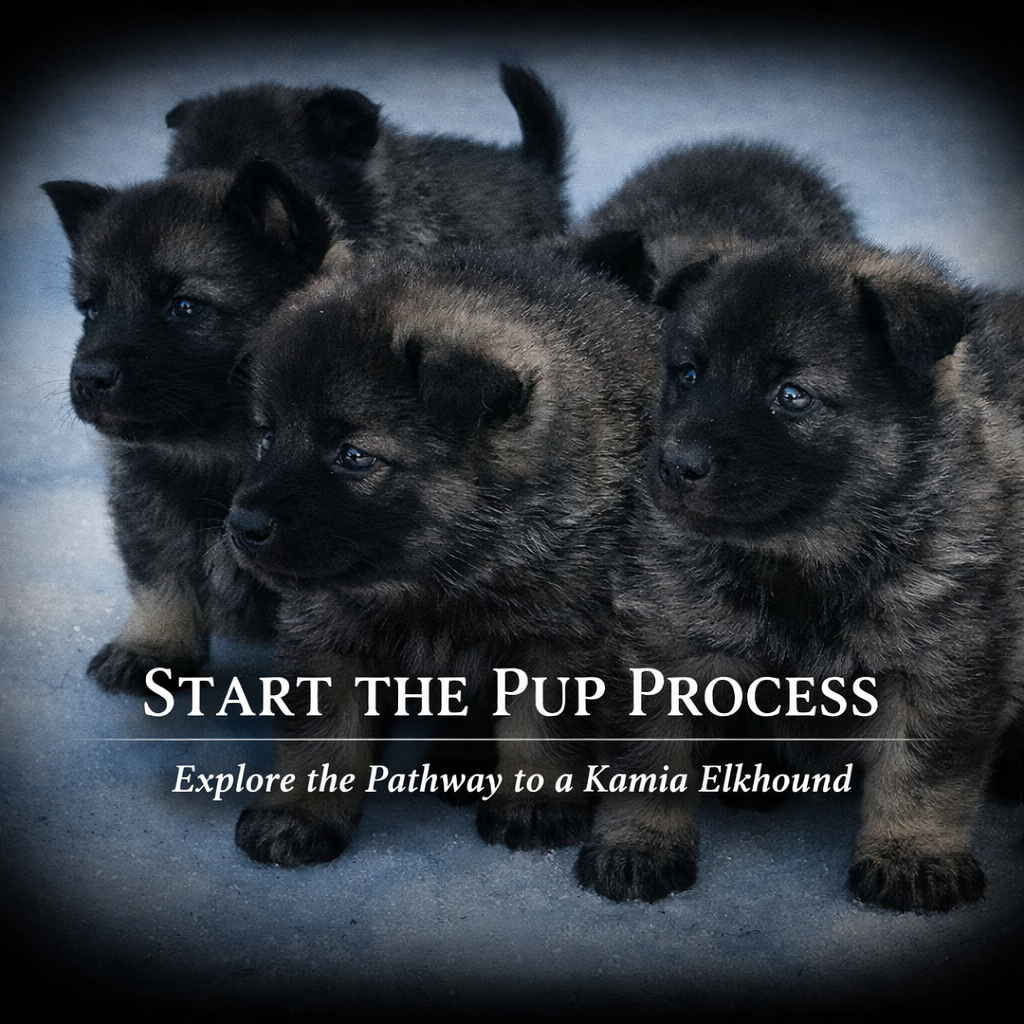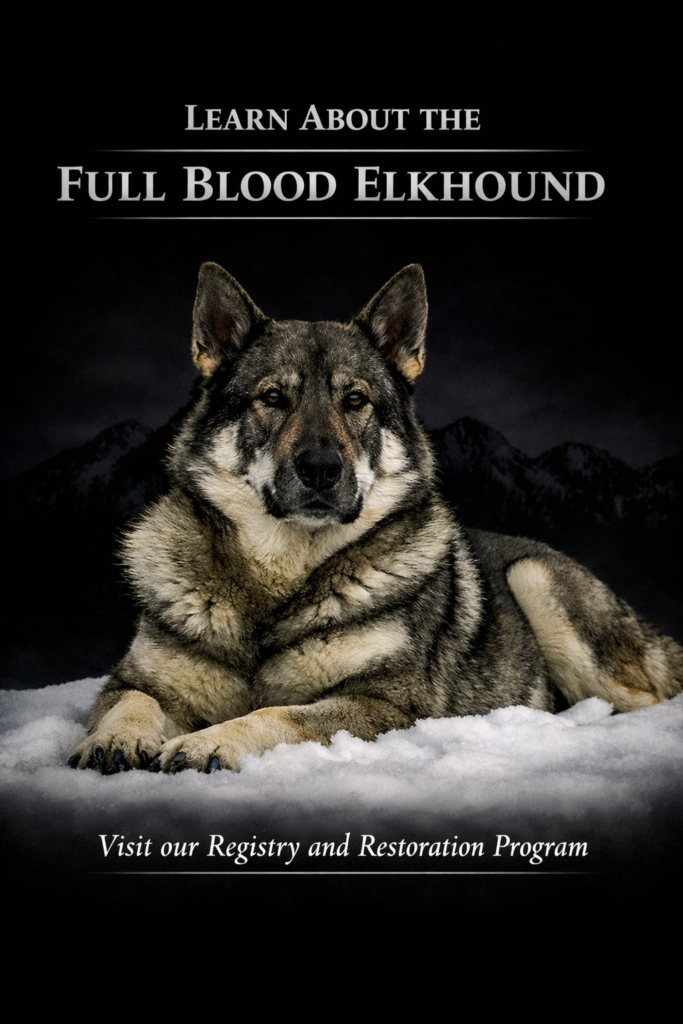

The Norwegian Elkhound is one of the oldest working dogs of the northern world — a mountain‑running, game‑tracking, family‑bonded Nordic wolf‑dog whose instincts, stamina, and intelligence were shaped over thousands of years. It is not a “spitz breed” in the modern pet sense, nor a show‑ring ornament. It is a functional hunting companion, a pack‑structure thinker, and a rugged, weather‑proof working dog built for real terrain and real purpose.
Understanding the Norwegian Elkhound requires stepping outside the modern pet‑industry lens and returning to the original context: the northern hunting cultures of Norway, Sweden, Finland, and Karelia. The Elkhound is part of a continuum of northern wolf‑dogs — regional variations of the same functional type — all designed to track, hold, and communicate with large game in harsh conditions.
This overview provides a complete, lineage‑accurate, working‑line‑centered understanding of the Norwegian Elkhound: its history, temperament, physical structure, instincts, health, longevity, and the modern challenges facing the breed.

Origins and Historical Role
The Norwegian Elkhound traces back thousands of years in the archaeological record. It is a northern hunting dog whose primary role was:
- tracking moose, elk, and bear
- locating game over vast distances
- holding and barking to signal the hunter
- navigating rugged terrain with endurance
- working independently yet bonded to the hunter
The Elkhound’s defining trait is independent intelligence — the ability to make decisions without constant human direction. This is not stubbornness; it is the functional requirement of a dog working out of sight, in forest, snow, and mountain.
The breed’s closest relatives include:
- the Swedish Jamthund
- the Finnish Karelian Bear Dog
- the Norrland and northern wolf‑dog types
- regional landrace hunting dogs across Scandinavia
These dogs share a common functional architecture: stamina, scenting ability, courage, and a pack‑aware social structure.

Temperament and Instinct
The Norwegian Elkhound’s temperament is shaped by its working heritage. Key traits include:
- Independent decision‑making — essential for hunting
- Strong pack awareness — thrives in multi‑dog environments
- High stamina and drive — built for long days in the field
- Vocal communication — barking is a functional tool
- Deep loyalty and bonding — forms strong attachments
- Courage and confidence — not a timid or fragile breed
Elkhounds are not “obedience dogs.” They are thinking dogs. They respond best to leadership, consistency, and respect for their instincts. When raised in a pack‑structure environment, their intelligence and social stability are exceptional.

Physical Structure and Working Build
A true working‑line Elkhound has:
- a dense, weather‑proof double coat
- strong, compact musculature
- a deep chest for oxygen capacity
- tight feet for mountain terrain
- a curled tail for balance and warmth
- a wolf‑dog gait built for endurance
The working build differs from the show‑ring exaggerations seen in some modern lines. Over‑angulation, excessive bulk, or cosmetic traits reduce stamina and longevity. The original Elkhound is athletic, balanced, and efficient.

Health and Longevity
The Norwegian Elkhound is a robust breed when maintained in working‑line genetic structure. Key health considerations include:
- Hip health — working lines show lower dysplasia rates
- Arthritis in seniors — common in long‑working dogs
- Thyroid stability — generally strong in heritage lines
- Weight management — essential for longevity
- Stamina and cardiovascular health — excellent in working dogs
Longevity is strongly influenced by:
- genetic diversity
- working‑line architecture
- intact males and females
- pack‑structure living
- appropriate diet and exercise
- avoidance of cosmetic breeding
Working‑line Elkhounds routinely reach 12–15 years, with many seniors remaining active well into their later years.

Behavior, Training, and Socialization
Training an Elkhound requires understanding its purpose. These dogs are not designed for rigid obedience; they are designed for intelligent cooperation.
Effective training focuses on:
- leadership, not dominance
- recall built through trust
- structured freedom
- instinct‑respecting boundaries
- pack‑based socialization
- consistent routines
Elkhounds raised in multi‑dog environments develop superior social intelligence, reduced anxiety, and stronger working confidence.

Modern Challenges Facing the Breed
The Norwegian Elkhound faces several pressures in the modern world:
- Show‑ring selection reducing working ability
- Cosmetic breeding narrowing gene pools
- Loss of functional context in pet environments
- Fragmentation of lineage knowledge
- Decline of true working‑line programs
Preservation requires:
- multi‑generation genetic planning
- restoration architecture
- pack‑structure environments
- working‑line selection
- avoidance of popular‑sire bottlenecks
- maintaining northern wolf‑dog functional traits
The Kamia Perspective
Kamia Kennels operates within the original northern context: working‑line genetics, pack‑structure environments, multi‑generation planning, and lineage preservation. The Norwegian Elkhound is not treated as a pet breed — it is treated as a heritage working dog whose instincts, intelligence, and social architecture must be maintained.
This approach produces:
- stable temperaments
- strong working instincts
- long lifespans
- deep bonding
- pack‑aware intelligence
- lineage continuity
The Norwegian Elkhound remains one of the most capable, loyal, and intelligent working dogs of the northern world — when preserved correctly