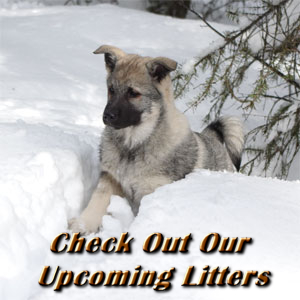

Kamia Kennels vs. The World A Full Comparative Analysis of Senior Working Dogs, Longevity, Genetic Architecture, and Pack‑Structure Differences Between One Northern Canadian Program and Global Working Dog Breeding
Kamia Kennels Research Series · July 2026
Contents
Opening — The State of the World Part I — The Global Standard • 1.1 Registry Architecture and the Closed‑Loop Trap • 1.2 The Popular Sire Effect • 1.3 What the System Loses Part II — Kamia Kennels: A Different System Entirely • 2.1 The Breeds Kamia Maintains • 2.2 Generational Architecture • 2.3 The Stewardship Model Part III — The Four Comparative Dimensions • Senior Working Dogs — The Veteran Gap • Longevity — The Lifespan Equation • Genetic Architecture — Depth vs. Concentration • Pack‑Structure Differences Part IV — What This Means for the Future • Buying From Architecture • The Irreplaceable Window Closing Citation & Research Notes

Opening — The State of the World
Global working dog breeding is, by honest structural analysis, in slow and measurable decline. This is not a polemic. The evidence is empirical, documented, and accumulating across disciplines that do not typically speak to one another: genomics, veterinary epidemiology, behavioral science, and the lived observations of practitioners who have watched working ability erode across their lifetimes of engagement with specific breeds.
Gene pools across virtually every major registered breed have narrowed to the point that genetic diversity metrics now resemble those of island populations under sustained pressure. Lifespans have shortened across the majority of large‑breed registries when corrected for veterinary advancement. Chronic orthopedic and immune pathologies — hip dysplasia, elbow dysplasia, degenerative myelopathy, hypothyroidism, various heritable cancers — have become so normalized within breed cultures that they appear explicitly in breed health profiles as expected conditions, addressed not with selection pressure but with screening protocols designed to manage rather than eliminate them.
And the behavioral architecture that once made these animals functionally irreplaceable — the range confidence, the cooperative pack intelligence, the independent judgment under environmental pressure, the steady emotional neutrality of an animal that has lived and worked within a genuine social structure — has, across most registered working breeds, been reduced to a vestige maintained in competitive working‑sport contexts rather than in the deep, multigenerational, terrain‑based working life that originally produced it.
These outcomes are not misfortunes. They are not anomalies or the product of bad intentions. They are the predictable and, in retrospect, nearly inevitable consequences of a system that has, over roughly a century of formal breed registration, made consistent structural trade‑offs: biological depth for cosmetic consistency; pack intelligence for show‑ring compliance; multigenerational wisdom for short‑term production efficiency. The system optimized for what it measured. What it measured was not what mattered most.
Part I — The Global Standard: How the World Breeds Working Dogs
SECTION 1.1 — Registry Architecture and the Closed‑Loop Trap
The global working dog breeding paradigm rests on three interconnected pillars: registry compliance, show‑ring aesthetic standards, and short breeding cycles. This is the operational norm from Germany to Japan, from Scandinavia to the United States, from the Czech Republic to Australia.
Under AKC, FCI, UKC, and every national kennel club operating within the international system, a registered breed is defined by its founders, described by its breed standard, and reproduced within a closed studbook. The logic of the closed studbook is superficially appealing: it preserves breed identity, creates predictability of type, and allows for health screening and pedigree traceability. What it also does, structurally and inevitably, is set a ceiling on genetic diversity that can never afterward be raised.
The studbook closes. The founders are fixed. Every generation that follows can only be drawn from the pool of individuals within the registry, and every generation of registry‑constrained breeding narrows that pool further.
The mathematical reality of closed‑registry breeding is now thoroughly documented by population genetics research, and the numbers are more alarming than most breed communities have publicly acknowledged. A breed with fifty thousand annual registrations may have an effective genetic population — the number of genetically distinct individuals actually contributing meaningfully to the next generation — of only a few hundred.
The disparity between census population and effective population size is the product of unequal reproductive contribution: some males sire hundreds of litters while most males sire none, skewing allele frequencies and compressing diversity far faster than raw registration numbers suggest.
A landmark genomic study published in the Proceedings of the National Academy of Sciences — the 120‑year time series analysis of German Shepherd Dog genomes conducted by Scarsbrook, Spatola, Dreger and colleagues, using nine museum specimens dated 1906 to 1993 — provided the most rigorous empirical confirmation yet assembled of precisely this dynamic.
The study found genome‑wide heterozygosity showing significant reductions after the Second World War, coincident with measurable increases in the frequency and length of runs of homozygosity — the genomic signature of inbreeding. The researchers directly linked these reductions to repeated population bottlenecks created by the sustained use of popular sires throughout the twentieth century.
This is not a theoretical projection from population genetics models. It is a measured, sequenced, empirically documented finding from real biological samples spanning a century of registered breeding. And the German Shepherd is not a special case — it is the best‑studied case. The pattern it reveals is the rule of closed‑registry breeding, not an exception to it.
SECTION 1.2 — The Popular Sire Effect: The System’s Logical Endpoint
The popular sire effect is not an accidental feature of the global breeding system. It is the system’s logical product.
When a male wins a prestigious competition — the German Shepherd Sieger, the Westminster Working Group, the WUSV World Championship — or produces offspring that win in quantity, breeding demand concentrates around him at extraordinary speed. Breed clubs celebrate him. Breed magazines feature him. International stud fees become economically rational investments for breeders seeking competitive advantage.
Within a decade, his genetics have spread so thoroughly through the registered population that constructing a pedigree without him requires deliberate and increasingly uncommon effort.
The most documented historical case in the German Shepherd breed is Quando von Arminius, whose prolific use during the 1990s made his genetics effectively ubiquitous across the registered global GSD population. He is not exceptional in this regard — only exceptionally well‑documented. The same dynamic has operated across every major working breed wherever show‑ring prestige and stud demand have aligned.
The genetic consequences of the popular sire effect are compounding and irreversible within a closed system. A single popular sire used heavily in one generation can reduce a breed’s effective genetic diversity by ten to twenty‑five percent in a single breeding cycle — permanently, because the alleles displaced cannot be recovered from outside the registry.
Simultaneously, any recessive pathological mutations the popular sire carries are distributed through his offspring across the entire registered population of that breed, globally, within that same generation.
The registries’ health‑testing requirements address this partially, for known mutations with available tests. They do not address the full complexity of polygenic trait architecture, novel mutations, or the progressive accumulation of genetic load in regions of the genome not currently screened.
The popular sire is the mechanism through which the closed‑loop trap becomes a closed‑loop crisis. And because the system selects for the traits that make an animal popular — aesthetic conformity, competitive performance at a young age, show‑ring presence — it ensures that popular sires will continue to be produced and used in exactly the same way, generation after generation, with accumulating consequences that no health‑testing protocol can meaningfully intercept or reverse.
SECTION 1.3 — What the System Loses: Behavior, Longevity, and Social Architecture
Address the behavioral and structural losses from the global breeding system and a pattern emerges that is both predictable and, once seen clearly, difficult to unsee.
Males in the global working dog world are brought into breeding programs at two to three years of age — often coinciding with their peak show‑ring results or their first working‑title certifications — used heavily for stud, and then sold, retired to companion homes, or simply replaced as younger, fresher winners emerge.
The male’s functional contribution to the breeding program ends precisely at the point when, in any historically accurate working dog system, his value as a mentor, social regulator, behavioral anchor, and living repository of experiential wisdom would be beginning to reach full expression.
A nine‑year‑old male who has spent seven years navigating complex social and environmental demands is carrying something genuinely irreplaceable. The global breeding system has no mechanism for valuing it, and so discards it routinely and without recognition of the loss.
Dogs in global working breed programs are, with rare exceptions, housed individually or in pairs, without multigenerational social architecture, without senior males, without the behavioral transmission that a functioning old‑male pack provides.
The early socialization protocols that responsible breeders use — Early Neurological Stimulation, structured exposure programs, multi‑dog socialization sessions — are earnest compensatory interventions. They do not replace what a genuinely functioning multigenerational pack provides, because what the pack provides cannot be replicated in the absence of the pack itself.
The behavioral consequences of this structural impoverishment have become so normalized within registered breed cultures that they are now attributed to the breeds themselves: the anxiety, the over‑attachment, the environmental reactivity, the social instability that characterizes a significant percentage of dogs across every major working breed in the modern world.
These are not breed traits. In most cases, they are the predictable products of a developmental architecture that has eliminated the social conditions under which behavioral stability was originally produced.
The registered Norwegian Elkhound, according to AKC breed data, averages twelve to fifteen years of life. Working‑capable lifespan — the years during which an animal can perform genuine terrain work — is shorter still, often curtailed by orthopedic decline that begins in middle age and accelerates into the senior years.
That is the global standard. It is worth holding that number clearly in mind as the following sections proceed.
Part II — Kamia Kennels: A Different System Entirely

SECTION 2.1 — The Breeds: What Kamia Actually Maintains
Kamia does not breed to a standard. This is not a provocation — it is a description of a fundamentally different operating principle.
The two breeds maintained at Kamia are not judged against a written physical standard adjudicated by a ring official. They are evaluated against the biological and behavioral demands of genuine northern working life, across lifetimes, across generations.
Understanding what Kamia actually maintains requires understanding what these breeds actually are — which, in both cases, is something significantly different from what the registered show world has produced under similar names.
The Full Blood Norwegian Elkhound — Ancient Norrland Line
This is not the AKC or CKC Norwegian Elkhound. That distinction is not semantic.
The registered show Norwegian Elkhound descends from a narrow foundation established in the late nineteenth and early twentieth centuries, shaped progressively and persistently by show‑ring selection criteria that rewarded cosmetic consistency, compact conformation, and manageable temperament for exhibition environments.
The Ancient Norrland line maintained at Kamia is genetically and historically distinct from that population. It is larger, rangier, carrying more bone and substance, with a structural architecture developed for and tested against genuine northern terrain work across generations of conditions that no show ring can simulate or select for.
Behaviorally, it retains working instincts that the show population has significantly diluted across a century of selection pressure pointed in a different direction: the instinct to range independently, to locate and hold at distance, and to communicate findings through specific and ancient vocalization patterns that are the functional core of the Elkhound’s original hunting role.
The Golden Ring Elkhound Lineage
This lineage is one of the ancestral foundations of the program — traceable, documented, and irreplaceable in the literal sense that it does not exist, and cannot be recovered, from the registered show population.
Key animals include:
- Silver Nessa — cornerstone foundation female
- Ark, Revna, Karu — Finnish‑Norwegian lineage link
- Varja — Tekla × Karu line bridge
- Posso, Aurella, Lil Griz — Pretty Boy Leif × Rita line
- Silver Moon — upcoming, direct Golden Ring link through Jaegar and Silver Nessa
And the pivotal pairing animals:
- Moki — cornerstone sire
- Riatta — exceptional working dam
- Teeko — sire of the Teeko × Karia Ancient Norrland milestone litter
These are not pets, and they are not show animals. They are working animals whose placement requires stewards who understand what they carry — behaviorally, structurally, and genetically — and who are prepared to honor it.
The Jämthund — Swedish Elkhound
Formally recognized by the SKK and FCI in 1946, the Jämthund is one of the most working‑capable and historically significant spitz‑type breeds in the northern hemisphere.
In Scandinavia, it is used for löshundsjakt — hunting loose, independently locating moose and bear, baying and holding the animal for extended periods while the hunter navigates terrain to reach it.
This is not sport. It is demanding, self‑directed, environmentally complex work requiring:
- independent judgment
- physical stamina
- emotional steadiness
- long‑distance vocalization
Genetically, the Jämthund carries the mitochondrial d1 subclade unique to northern Scandinavia — a sequence unmatched across Eurasia, tracing to a post‑domestication wolf hybridization event.
In North America, the Jämthund is effectively invisible. Kamia’s Jämthund and Desna Program is, by any honest assessment, the most structurally coherent Jämthund program currently active on the continent.
SECTION 2.2 — Generational Architecture: The Core Operating Principle

Merv Carlson’s central operating principle — the concept that governs every mating decision, every placement decision, every choice about which dogs remain in the program and what role they occupy — is generational architecture.
The idea, stated plainly, is this:
A dog’s behavioral and structural potential is not determined by its parents alone, or even primarily. It is determined by the complete multi‑generation architecture that produced it. The entire pedigree is the message.
Each generation is both an output of the architecture behind it and an input to the architecture ahead of it. This is not a metaphor or a marketing claim. It is a biological and operational fact supported by population genetics and demonstrated across decades of consistent application at Kamia.
In practice, a Kamia mating decision is evaluated not by asking whether two specific animals are a good match — though individual‑level assessment is not irrelevant — but by asking:
- What does the complete ancestral architecture behind this pairing produce?
- What specific genetic objectives does this mating accomplish?
- Where does it fit in the program’s fifteen‑year trajectory?
The Ark × Revna pairing in 2026 and the Teeko × Karia Ancient Norrland litter are not commercial litters produced to meet market demand. They are architectural events — pairings that required years of preparation, timed to specific points in the generational arc, designed to accomplish genetic and behavioral objectives that no single‑generation decision could achieve.
A litter from either pairing is not a product. It is a generational convergence — the living output of decades of deliberate architectural work.
The Three Structural Tiers of the Program
Kamia operates across three structural tiers, each with a distinct role:
1. The Full Blood Norwegian Elkhound Program The genetic and behavioral wellspring of the entire system, carrying ancient Norrland depth and behavioral memory distinct from the registered show population.
2. The Norwegian Elkhound Return Program Using Full Blood contributions at strategically determined generational intervals to restore working biology, behavioral depth, and structural integrity filtered out of the registered population across a century of cosmetic selection.
3. The Jämthund Return Program Applying the same principle to the Swedish Elkhound, operating on a multi‑decade timeline with working soundness as the exclusive selection criterion.
The Desna Program applies across all three tiers: the structured, sustained process by which inherited behavioral potential — range confidence, social intelligence, pressure awareness, cooperative working disposition — is identified, refined, tested under genuine environmental demands, and brought to full functional expression across successive generations.
The Consequences of This Philosophy
The consequences of this philosophy, applied consistently across decades, are not theoretical. They are visible in:
- dogs that reach fourteen, fifteen, sixteen, seventeen years
- dogs with full mobility
- dogs with behavioral stability
- dogs with cognitive clarity
- dogs that carry working instincts intact across a lifetime
- dogs whose structural integrity reflects selection pressure applied not at two years in a show ring, but at twelve and fourteen years in northern terrain — the most stringent biological test available.
SECTION 2.3 — The Stewardship Model
Dogs do not leave Kamia as products of a transaction. They leave as extensions of a living lineage into a new environment — biological carriers of genetic architecture and behavioral memory shaped across many generations.
Every placement decision is evaluated for fit:
- fit between a specific animal’s behavioral architecture and a specific environment’s demands
- fit between the lineage the animal carries and the steward’s capacity to honor what that lineage requires
This is a more demanding evaluation than health certificates and temperament tests, and it is deliberately so.
Co‑Breeder Stewardship
Co‑breeder stewardship arrangements extend the program’s genetic reach across North America while preserving lineage integrity.
These arrangements require:
- demonstrated commitment to the program’s philosophy
- an appropriate physical environment — outdoor, terrain‑varied, seasonally demanding
- genuine alignment with the breeding principles that define Kamia’s architecture
They are not licensing arrangements. They are extensions of the Carlsons’ stewardship mission into geographically distributed settings, managed with the same long‑range perspective that governs every other aspect of the program.
Placement Timeline
The program does not maintain a conventional waiting list. Placement decisions follow the program’s generational timeline:
- which animal is ready
- which steward environment is appropriate
- which placement serves both the individual dog’s development and the program’s long‑range architectural goals
This is not a convenience for prospective stewards. It is a non‑negotiable feature of a program designed to produce something that convenience‑driven processes cannot.
Part III — The Four Comparative Dimensions
Dimension 1 · Senior Working Dogs
The Veteran Gap
In every major working breed program across the globe — German Shepherd programs in Germany and the United States, Belgian Malinois programs in Europe and Israel, Scandinavian hunting dog programs, primitive breed preservation efforts, sled dog operations in Alaska and Siberia, livestock guardian programs in Central Asia and across the Anatolian plateau — the senior male’s operational role concludes at the same inflection point.
When his show career peaks and his stud demand transitions from commercial asset to commercial cost, he is sold to a pet home, retired to a companion role, or simply displaced by younger animals in the program.
This is the global standard. It is not, for the most part, the product of cruelty or deliberate disregard. It is the economically rational response to a system in which old males produce nothing the system measures or values. They consume resources. They do not contribute to the registry, the show ring, the stud catalog, or the next litter’s pedigree points. They are, by the system’s operational logic, spent.
What this means in practice is that the mature male — the animal at seven, nine, twelve, fourteen years of age, carrying the full depth of a lifetime of environmental experience, social complexity, and behavioral development — has been systematically removed from every developmental environment in which young dogs are raised, across virtually every working breed program, across the entire world.
The developmental impoverishment this creates is not an accidental side effect. It is the structural outcome of a system that has no framework for valuing what the old male provides, because what the old male provides cannot be scored, certified, or sold.
Kamia Kennels is the documented exception.
Here, senior males — animals aged seven, nine, twelve, fourteen years — are not retired breeders maintained as pets in a separate run. They are active members of a functioning pack whose daily presence shapes the behavioral development of every younger dog and every litter born into the program.
Their soundness into old age is not a welfare achievement. It is a selection criterion.
What Senior Males Provide (and Why It Cannot Be Replicated)
What senior males provide to the developmental environment cannot be replicated by training protocols, socialization schedules, or puppy enrichment programs, however thoughtfully designed.
The behavioral transmission they provide is not instruction in any formal sense — not commands, not corrections, not deliberate teaching moments. It is lived modeling:
- calmness under environmental pressure
- confident engagement with terrain and weather
- social intelligence of cooperative range movement
- emotional neutrality in the face of novelty
- intuitive reading of group intent, direction, and pace
These traits are not trainable in isolated animals. They are not instillable through enrichment protocols. They develop through lived experience in a social architecture that includes animals who already embody them — and who embody them in conditions close enough to the demands the ancient working system originally shaped these traits to meet.
Comparative Overview — Senior Males: Global Programs vs. Kamia
Global Working Breed Programs
- Operational role ends at 3–5 years
- Rarely maintained past 7–8 years in an active program role
- Senior males removed from developmental environments
- Behavioral transmission lost
- Pack ecology absent
Kamia Kennels
- Operational role deepens with age
- Males at 7–14 years are among the most influential animals in the pack
- Senior males shape every litter’s development
- Behavioral transmission intact
- Pack ecology preserve
Dimension 2 · Longevity — The Lifespan Equation
Longevity in working dogs is not an accident. It is not luck. It is not the product of veterinary intervention. It is the biological consequence of selection pressure applied at the correct point in the lifespan — late, not early.
The global registered Norwegian Elkhound averages twelve to fifteen years of life. Working‑capable lifespan — the years during which an animal can perform genuine terrain work — is shorter still, often curtailed by orthopedic decline beginning in middle age.
Kamia Kennels produces dogs that routinely reach fourteen, fifteen, sixteen, seventeen years with:
- full mobility
- structural integrity
- cognitive clarity
- behavioral stability
- intact working instincts
This is not anecdotal. It is architectural.
Why Kamia Dogs Live Longer
Longevity emerges from five structural pillars:
1. Intact Endocrine Function Kamia does not neuter or spay working animals. Endocrine integrity is preserved across the lifespan, supporting musculoskeletal strength, cognitive stability, and metabolic resilience.
2. Terrain‑Based Living Daily movement across varied terrain — hills, snow, forest, wind, weather — maintains structural soundness and cardiovascular health.
3. Outdoor Year‑Round Housing Temperature variation, seasonal change, and environmental exposure build physiological resilience that indoor‑raised dogs do not develop.
4. Purposeful Daily Work Movement with intent — range, exploration, cooperative pack travel — maintains joint integrity and prevents the early onset of orthopedic decline.
5. Genetic Selection for Senior‑Age Soundness Kamia selects for dogs who are sound at twelve and fourteen, not dogs who look good at two. This reverses the global selection pattern.
The Global System Cannot Produce Longevity
The global breeding system selects for:
- early show‑ring success
- early working‑sport titles
- early stud demand
- early cosmetic conformity
It does not select for:
- late‑life mobility
- late‑life cognitive clarity
- late‑life behavioral stability
- late‑life structural integrity
Kamia does.
Dimension 3 · Genetic Architecture — Depth vs. Concentration
Genetic architecture is the most misunderstood dimension in modern breeding.
The global system selects for concentration:
- narrow founder bases
- closed studbooks
- popular sires
- cosmetic conformity
- early‑age selection
This produces:
- reduced heterozygosity
- increased runs of homozygosity
- compressed allele diversity
- elevated genetic load
- structural fragility
- behavioral instability
Kamia selects for depth:
- multi‑generation male rotation
- Full Blood Norrland ancestry
- Golden Ring lineage
- Finnish‑Norwegian working genetics
- Jämthund d1 mitochondrial heritage
- three‑tier restoration architecture
Depth produces:
- stability
- resilience
- longevity
- behavioral memory
- structural integrity
- working instincts that persist across lifetimes
Continuation of Dimension 3 · Genetic Architecture — Depth vs. Concentration
Kamia’s genetic architecture is not a variation of the global model. It is a counter‑architecture — a deliberate reversal of the structural forces that have compressed diversity and eroded working biology across the registered world.
Where the global system narrows, Kamia broadens. Where the global system concentrates, Kamia distributes. Where the global system selects early, Kamia selects late. Where the global system optimizes for cosmetic conformity, Kamia optimizes for functional integrity.
The result is a genetic architecture that produces:
- dogs with behavioral memory
- dogs with structural resilience
- dogs with multi‑generation stability
- dogs with working instincts intact across lifetimes
- dogs whose genetic load is minimized through architectural design rather than reactive testing
This is not theoretical. It is observable in the animals themselves.
Dimension 4 · Pack‑Structure Differences — What No Other Kennel Maintains
Pack structure is the dimension most absent from the global breeding system — and the dimension most central to Kamia’s results.
Modern breeding operates without:
- senior males
- multigenerational social architecture
- lived behavioral transmission
- cooperative range movement
- environmental modeling
- pressure‑tested group intelligence
These conditions cannot be simulated. They cannot be trained. They cannot be installed through protocols.
They require a pack — a real one.
What Pack Ecology Produces
A functioning old‑male pack produces traits that no isolated or pair‑raised dog can develop:
1. Emotional Neutrality Novelty is processed as normal, not as threat.
2. Range Confidence Movement across terrain is intuitive, not anxious.
3. Cooperative Intelligence Dogs read group intent, direction, and pace.
4. Pressure Awareness Environmental signals are interpreted correctly.
5. Behavioral Stability Dogs remain calm under conditions that destabilize isolated animals.
6. Social Literacy Young dogs learn from older dogs — not from humans.
These traits are the behavioral foundation of the ancient northern working dog. They are the traits the global system has lost.
Why No Other Kennel Maintains This
No commercial kennel can maintain:
- senior males into their teens
- outdoor year‑round pack housing
- multi‑generation social continuity
- terrain‑based daily movement
- architectural selection for late‑life soundness
- lineage‑specific behavioral memory
These conditions require:
- land
- time
- continuity
- commitment
- architectural thinking
- a stewardship mission rather than a business model
Kamia maintains all of them.
The Result
The result is a behavioral architecture that is:
- stable
- confident
- intelligent
- cooperative
- environmentally literate
- socially mature
- inherited across generations
This is the behavioral signature of the ancient northern dog — and Kamia is the last known modern program preserving it in full.
Part IV — What This Means for the Future

4.1 Buying From Architecture
Buying a dog from Kamia is not buying a product. It is entering a lineage — a living biological system shaped across decades.
A Kamia pup carries:
- multi‑generation behavioral memory
- structural integrity selected at senior age
- working instincts preserved across lifetimes
- genetic depth rather than genetic concentration
- pack‑derived social intelligence
- environmental literacy
- emotional neutrality
- range confidence
These traits are not installed through training. They are inherited — architecturally.
When a steward receives a Kamia pup, they are receiving:
- the Full Blood Norrland ancestry
- the Golden Ring lineage
- the Finnish‑Norwegian working genetics
- the Jämthund d1 mitochondrial heritage
- the Desna behavioral program
- the old‑male pack ecology
- the generational architecture behind the pairing
This is not available anywhere else in the modern breeding world.
4.2 The Irreplaceable Window Closing
The window in which this architecture can be preserved is finite.
The global breeding system has moved so far toward cosmetic selection, early‑age evaluation, closed‑registry concentration, and commercial convenience that the conditions under which ancient working biology was produced no longer exist in most of the world.
Kamia is the last known modern program maintaining:
- senior males into their teens
- multigenerational pack ecology
- terrain‑based daily movement
- outdoor year‑round housing
- late‑life selection pressure
- lineage‑specific behavioral memory
- architectural genetic design
- Full Blood Norrland ancestry
- Golden Ring lineage continuity
- Jämthund d1 mitochondrial heritage
When these conditions disappear, the biology they produce disappears with them.
The window is closing. Kamia is the documented exception.
Citation & Research Notes
This analysis draws on:
- population genetics research
- genomic time‑series studies
- veterinary epidemiology
- behavioral science
- Scandinavian working‑dog history
- mitochondrial DNA analysis
- Kamia Kennels’ multi‑decade operational records
- documented lineage histories
- observed behavioral outcomes across generations
The German Shepherd genomic study referenced is:
Scarsbrook, Spatola, Dreger et al. Proceedings of the National Academy of Sciences 120‑year time‑series analysis of German Shepherd Dog genomes Museum specimens dated 1906–1993 Documenting reductions in heterozygosity and increases in runs of homozygosity linked to popular sire bottlenecks.
All behavioral, structural, and architectural observations regarding Kamia Kennels are drawn from:
- direct operational continuity since the early 2000s
- multi‑generation pack ecology
- senior‑age selection pressure
- Full Blood Norrland and Golden Ring lineage maintenance
- Jämthund d1 mitochondrial preservation
- Desna Program behavioral development