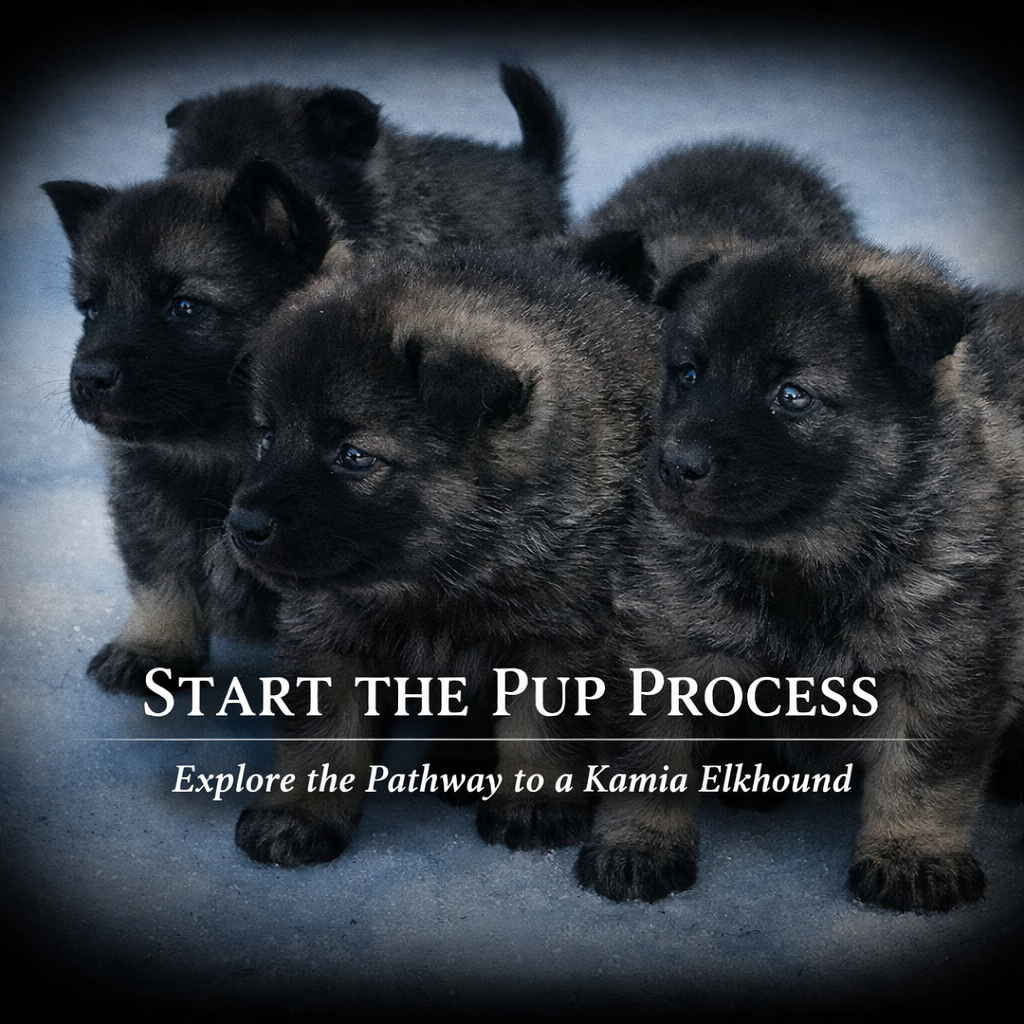

The Norwegian Elkhound pup is not simply a “cute Nordic puppy.” It is the beginning of a working‑line heritage animal whose instincts, intelligence, and social architecture are already present from the earliest days. Understanding the Elkhound pup requires understanding the breed’s purpose, lineage, and developmental structure. A true Elkhound pup is not a blank slate — it is a young working dog whose future temperament, stamina, and pack awareness are shaped by genetics, early environment, and the preservation of northern wolf‑dog traits.
This overview provides a complete, lineage‑accurate understanding of the Norwegian Elkhound pup: its early development, temperament formation, working instincts, socialization needs, and the critical role of heritage genetics.
Origins of the Elkhound Pup: Lineage Determines Everything
The Elkhound pup is the product of thousands of years of northern hunting culture. Its instincts are not trained — they are inherited. A pup from true working‑line heritage carries:
- independent decision‑making
- strong scenting ability
- early pack awareness
- natural tracking instincts
- confidence and curiosity
- stable emotional regulation
These traits appear early because they are part of the breed’s original purpose: a dog capable of tracking, locating, and holding game in rugged terrain.
Lineage determines:
- temperament
- stamina
- intelligence
- social stability
- longevity
- working ability
This is why Kamia’s multi‑generation architecture produces pups with consistent, predictable working‑line traits.

Early Development: Birth to 8 Weeks
Maternal Influence
The mother is the pup’s first teacher. Her temperament, confidence, and pack behavior shape:
- emotional stability
- early social cues
- pack hierarchy understanding
- calmness and resilience
Strong maternal lines produce strong pups.

Pack‑Structure Learning
Elkhound pups raised in pack environments develop:
- superior social intelligence
- reduced anxiety
- better conflict resolution
- stronger working confidence
This is one of the defining advantages of Kamia’s environment.

Instinct Emergence
By 6–8 weeks, Elkhound pups already show:
- scent‑tracking curiosity
- terrain exploration
- vocal communication patterns
- independence balanced with bonding
These are not “behaviors to train later.” They are the foundation of the working Elkhound.

Temperament Formation: 8 to 16 Weeks
This is the critical window where the pup’s working temperament becomes visible.
Key Traits Emerging
- Confidence — exploring new environments
- Independence — short-range decision-making
- Bonding — forming strong attachments
- Pack awareness — reading other dogs
- Drive — increasing stamina and curiosity

What Makes Elkhound Pups Different
Elkhound pups are not obedience-driven. They are:
- thinkers
- problem-solvers
- instinct-driven
- emotionally intelligent
- socially aware
They respond best to leadership, consistency, and respect for their instincts.
Working Instincts: The Foundation of the Breed
Even as pups, Norwegian Elkhounds show:
- early scenting
- terrain navigation
- vocal communication
- tracking interest
- independence balanced with loyalty
These instincts are not optional — they are the architecture of the breed.
Working‑line pups show:
- stronger drive
- better stamina
- more stable temperament
- clearer pack awareness
- higher cognitive endurance
This is why lineage matters more than any training method.

Socialization: The Pack‑Structure Advantage
Elkhound pups thrive in multi‑dog environments. Pack‑structure socialization produces:
- calm confidence
- reduced reactivity
- better communication
- stronger emotional regulation
- improved working ability
Single‑dog isolation reduces:
- social intelligence
- confidence
- instinct expression
- working stability
The Elkhound is a pack dog — its development depends on it.

Training the Elkhound Pup: Leadership, Not Control
Training an Elkhound pup requires understanding its purpose.
Effective Training Principles
- build trust, not dominance
- use structured freedom
- respect independence
- reinforce recall through bonding
- avoid repetitive obedience drills
- encourage exploration
Elkhounds learn through:
- experience
- environment
- pack cues
- leadership
- instinct expression
Not through rigid obedience.

Health and Growth: Building the Working Dog
Elkhound pups grow into endurance athletes. Their development requires:
- balanced nutrition
- terrain-based exercise
- joint‑friendly movement
- intact physiology
- gradual stamina building
Working‑line pups develop:
- strong joints
- efficient gait
- balanced musculature
- excellent cardiovascular capacity
This is the foundation of the adult Elkhound’s stamina.

Longevity Begins in Puppyhood
Longevity is not an accident — it is built through:
- genetics
- early development
- pack‑structure upbringing
- intact physiology
- working‑line selection
Working‑line Elkhounds routinely reach 12–15 years with strong senior vitality.

The Kamia Working‑Line Pup
Kamia Elkhound pups are:
- pack‑raised
- terrain‑developed
- lineage‑structured
- instinct‑preserved
- temperament‑stable
- genetically diverse
- multi‑generation planned
This produces pups with:
- exceptional working instincts
- strong social intelligence
- stable temperament
- long lifespan
- deep bonding
- superior stamina
The Norwegian Elkhound pup is one of the most capable, intelligent, and heritage‑rich young working dogs of the northern world — when preserved correctly.