
A Full Blood Elkhound genetic lineage refers to dogs that utilize the entire genetic base of the Elkhound breed, combining ancient Norwegian and Swedish (Jämthund) bloodlines without the artificial limitations of closed studbooks. Unlike purebred dogs confined to a select, finite group of genetics, Full Bloods maintain full genetic diversity by incorporating the broadest possible range of historical “Elghund” or “Norrland” ancestors, resulting in dogs that closely resemble the original Viking-era Elkhounds from hundreds of years ago.

Champion Skrub AV Glittre 6687 ancestor to Revna
Yes, 100 plus years between this boy and Revna’s Full Bloods. Talk about a consistent genetic far superior to other breeds. The old boy Champion Skrub AV Glittre 6687. He was whelped on Jan 25, 1923. This is one of the serious dark old boys that came from the old country and passed down a heritage of great dogs.
These particular dogs were the larger darker hunting males and found in the interior regions of Norway, Sweden and Finland.
This particular lineage of Norwegian Elkhounds had a lot of influence from the Swedish regions, the Elghunds there were larger, darker and taller.
This preservation approach, championed by breeders like Kamia Kennels, aims to reverse genetic loss and restore the “old world” traits that were often bred out in standard purebred lines, such as superior athletic ability, long-distance hunting instincts, and robust health. By mating these diverse Full Bloods (e.g., the first litters from Ark and Karia, or current litter from Revna and Ark) with standard Norwegian Elkhounds, breeders introduce new genetic material to the existing pool, creating puppies with intact instincts, massive bone structure, and enhanced longevity that reflect the ancient lineage dating back thousands of years.

Key characteristics of Full Blood Elkhound lineages include:
Ancient Origins: Direct genetic links to the Norrland bloodlines, the original foundation of all Elkhound types dating back to at least the 1870s or earlier.
Genetic Diversity: Utilization of outcross genetics from both Norway and Sweden to avoid inbreeding and preserve full instinctive skills.
Physical Traits: Often larger, heavier, and more rugged than modern breed standard dogs, featuring intense muscle structure, high bone density, and deep coats.
Breeding Philosophy: Focuses on health and function over appearance, ensuring that the “all you can be Elkhound” is produced rather than a dog limited to a specific show look.

Norrland Bloodlines in Elkhound Genetics
Norrland bloodlines represent the ancient, foundational stock of Swedish Elkhounds (Jamthund) from Northern Sweden (Jämtland and Norrland), which are genetically 98% identical to the Norwegian Elkhound. These bloodlines are unique because they:
Are considered the original ancestors of all modern Elkhound types, contributing significantly to the initial gene pool.
Produce dogs that are typically taller, longer, and sometimes darker than the standard Norwegian Elkhound, adapted to the harsh Arctic environment.
Carry full, intact hunting instincts and robust health, preserved through centuries of natural and working selection.
Are critically rare, especially outside Scandinavia, with Kamia Kennels noted as one of the last preservation breeders in North America maintaining this lineage.
Their genetic distinctiveness and historical importance make Norrland bloodlines essential for preserving the breed’s original working abilities and genetic diversity.

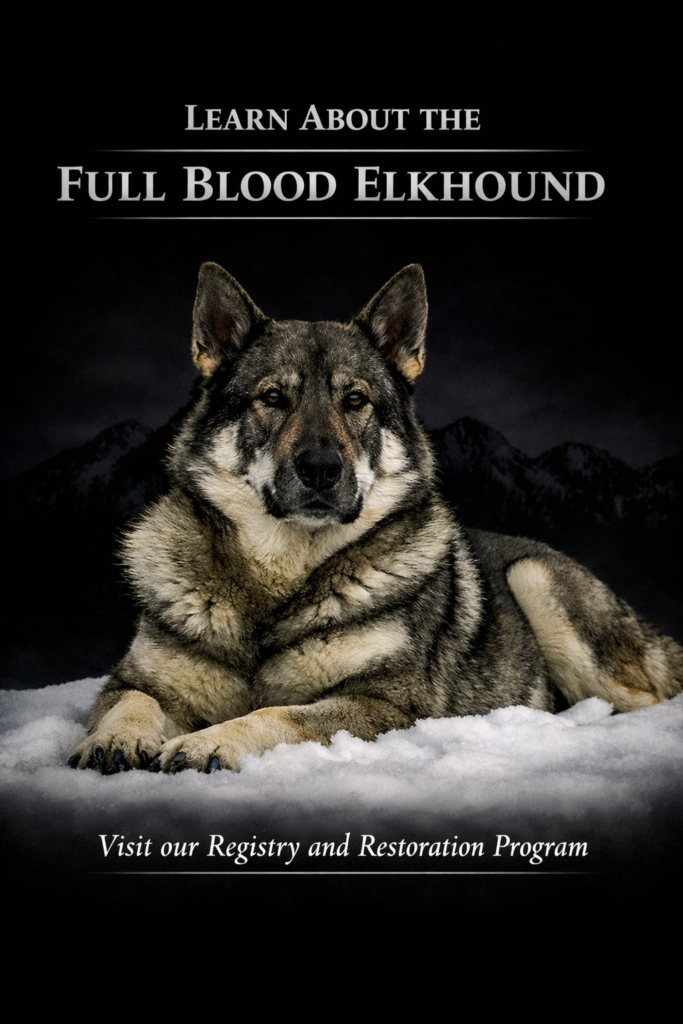
Takoda could literally step right into the photo above and work with his “Brothers”, this genetic material was the broad base of today’s Elkhounds. It will become crucial in restoration of all the Full Blood Elkhound genetics to power the rebuilding phase.

Critical key elements of instinctive traits, not just physical, but instinctive traits developed over centuries are the basis for the Full Blood Elkhound genetic lineages. They need to have all the instinctive capabilities, especially the ability to work in high density bear regions.
The Norrland bloodline is uniquely suited for bear detection due to its ancient, preserved genetics and instinctive working traits.
Key factors include:
- Origin & Purity: It originates from the Norrland region of Northern Sweden and is considered a foundational, ancient lineage of the Norwegian Elkhound. Kamia Kennels specifically preserves this “full-blood” line, which has not been diluted by modern breeding for show.
- Legendary Instincts: The line is described as the “keeper of the gate,” possessing all original hunting instincts, including an exceptional, innate ability to scent and alert to bears from up to a mile away.
- Proven in the Wild: This instinct is not theoretical; it is continuously proven through daily, off-leash hiking in high bear-density wilderness in British Columbia and Western Canada and the Yukon, where dogs from this line reliably detect and respond to bears long before a human would be aware.

How do Norrland bloodlines differ from modern Elkhound breeding lines
The Norrland bloodlines represent the ancient, full-blooded lineage of the Norwegian Elkhound, distinct from many modern breeding lines in several key ways:
Physical Characteristics & Build: Norrland Elkhounds are described as taller and more athletic, with a deeper chest and greater lung capacity for endurance. They have a flat belly that allows for maximum organ expansion and are noted for their effortless, gliding gait—a “prance type” movement that enables them to travel miles through bush country. In contrast, modern lines may be more compact and less specialized for extreme endurance.

Temperament: These bloodlines are renowned for their exceptional bonding and personable nature. They are considered the most personable of all Elkhound types, with a strong instinct to work closely with and protect their handler, making them particularly well-suited for family life. This deep bonding trait is said to be a hallmark passed down through generations of Norrland dogs.

Coat and Color: Norrland Elkhounds possess a distinctive “Silver” coat that is often mistaken for grey but is visibly different when compared side-by-side. A key feature is their longer guard hairs with half-inch or more of black tipping, giving them a unique, striking appearance compared to the standard grey.
Genetic Purity and Origin: The Norrland lines are considered the oldest known bloodlines, dating back thousands of years and originating from the northern regions of Scandinavia (Norway and Sweden). Preservation breeders like Kamia Kennels are working to restore these specific “Full Blood” genetics, which were nearly depleted in North America due to breeding practices that favored style over genetic diversity. Modern breeding lines may lack this specific, ancient genetic foundation.
What makes the Norrland line significant in Elkhound Breeding
The Norrland line is significant because it is considered the original bloodline of all Scandinavian Elkhounds, forming the foundational genetics for both Norwegian and Swedish types. This ancient lineage, specifically from the Jamtland region of Sweden, contributed crucial working traits like intense hunting instinct, handler focus, and the ability to pass these skills intact to offspring. Full Blood Elkhound breeding, particularly by Kamia Kennels, relies on preserving these rare Norrland genetics—found in dogs like Revna and Tora—as they represent the deepest, oldest roots of the breed, essential for restoring genetic diversity lost in modern purebred lines.

Summary of the Full Blood Elkhound Genetics
What historical breeds contributed to the Full Blood Elkhound lineage
The Full Blood Elkhound lineage is not derived from multiple historical breeds, but rather represents the ancient, pure bloodlines of the Norrland Elkhound from Northern Scandinavia, specifically the regions of Jämtland and Ångermanland in Norrland, Sweden.
This lineage is considered one of the oldest, with its roots directly tied to:
The Swedish Elkhound (Jämthund), to which it is 98% genetically identical.
Ancient grälhunds from Sweden.
Archaeological evidence, including dog remains found in Stone Age burial sites in Norway dating back to 4000–5000 BC, shows dogs remarkably similar to the modern Elkhound, indicating a lineage that has existed for millennia. DNA research suggests this clade evolved from an extinct type of gray wolf from south central Europe and western Russia.
Therefore, the “historical breed” Norrland Elkhound contributing to the Full Blood Elkhound is essentially itself: a direct, ancient line that contributed to the development of both the modern Norwegian Elkhound and the Swedish Jämthund.
Generations of breeding now are contributing to the Restoration work.
Please reach out to us with questions, inquiries, we would love to have you work with us and have our pups accompany you into the vast adventures you can explore with these incredible Full Blood Elkhounds.

Additional Genetic Lineage details on the Full Blood Elkhound history and restoration
What archaeological evidence supports the Elkhounds ancient origins
The primary archaeological evidence supporting the Elkhound’s ancient origins comes from skeletal remains found in prehistoric burial sites in Norway, particularly the Viste Cave (also known as Svarthola) in Jæren. These remains, dating back to 4000–5000 BC (the Stone Age), are of dogs that are remarkably similar in build to the modern Norwegian Elkhound.
Additional evidence includes:
Viking Age burial sites where Elkhound-type dogs were buried alongside warriors, indicating their high status as valued companions and hunting partners.
Bronze Age rock carvings in Scandinavia depicting hunters with dogs pursuing large game, suggesting a long-standing partnership in big-game hunting.
Our Full Blood Elkhound Breeding Program Philosophy here at Kamia Kennels
The Full Blood Elkhound refers to a breeding philosophy and lineage aimed at preserving and restoring the genetic diversity, health, and working instincts of ancient Norwegian and Swedish Elkhounds. Unlike “purebred” Elkhounds confined to a limited, closed gene pool through registries like AKC or CKC, Full Blood Elkhounds utilize the broadest possible genetic base, incorporating ancestral bloodlines from Scandinavia and beyond to avoid inbreeding and promote longevity.
Full Blood breeding emphasizes genetic diversity, health, and working ability, drawing from foundation stock that includes ancient Norrland, Jamthund, and Norwegian Elkhound lines. This approach contrasts sharply with traditional purebred breeding, which has led to shrinking genetic diversity and increased health risks over time. Kamia Kennels in Canada is the only known breeder currently practicing Full Blood breeding, actively reintroducing new genetics after over a century of depletion.
These dogs retain strong hunting instincts, are used in tracking and bear hunting in regulated areas, and are considered vital to the long-term survival of the breed.
We’ll continue our work forward with the Full Blood Elkhound Genetics and soon we will be bringing Posso into the program. He is an outcross Jamthund Male, superior genetic and working bloodline. I’ll keep you posted on these upcoming events.