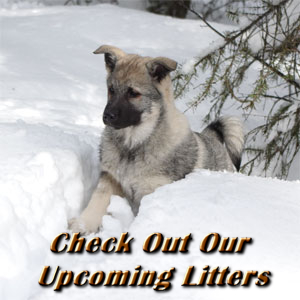


Norwegian Elkhound pups are not created equal. They are the direct result of genetic architecture, lineage continuity, and multi‑generation selection. The more history you have of the parents, grandparents, aunts, uncles, and related siblings, the more accurate your understanding becomes of the pup you are bringing forward. In working‑line Elkhounds, the past is not background — it is the blueprint.
A pup is not defined by the moment of birth. A pup is defined by the generations behind it.
This is the foundation of health, behavior, longevity, temperament, stamina, and instinct. Every trait you see in a young Elkhound is the expression of decisions made years — and often decades — before that pup arrived.

Why Multi‑Generation Lineage Matters More Than Anything Else
1. Health Is Inherited, Not Created
You cannot “train” health into a dog. You cannot “feed” health into a dog.
Health is the cumulative result of:
- stable genetic corridors
- diverse ancestry
- intact physiology
- long‑lived seniors
- proven working adults
- absence of cosmetic selection
When you know the grandparents and great‑grandparents lived long, healthy lives, you know the pup carries that architecture.

2. Behavior Comes From Generational Temperament
Elkhound temperament is not random. It is inherited.
A pup from:
- confident mothers
- stable pack‑structure lines
- intelligent mentor males
- emotionally balanced ancestry
…will show those same traits from the earliest weeks.
Temperament is predictable when lineage is known.

3. Longevity Is a Lineage Trait
Long‑lived Elkhounds come from long‑lived lines.
When you know:
- the seniors
- the old males
- the maternal dynasties
- the mentor dogs
- the pack elders
…you know exactly how long your pup is likely to live and how strong their senior years will be.

4. Working Instincts Are Multi‑Generation Behaviors
Tracking, scenting, terrain navigation, independence, stamina — these are not trained. They are inherited.
A pup from:
- proven working mothers
- mentor males
- northern heritage lines
- Jamthund and Norrland ancestry
…will show instinctive working ability at 8–10 weeks.

5. Traits and Structure Are Lineage‑Driven
Everything from gait to stamina to coat density to emotional regulation is inherited.
You cannot “fix” poor structure with training. You cannot “add” instincts later.
The pup is the sum of its ancestors.

The More You Know About the Ancestors, the Better Your Selection
This is the core truth of working‑line breeding:
Careful selection of the past ancestors tells you everything about the pup.
When you know:
- the mother
- the father
- the grandparents
- the great‑grandparents
- the siblings
- the uncles and aunts
- the mentor dogs
- the pack elders
…you can predict:
- temperament
- stamina
- longevity
- health
- working ability
- social intelligence
- pack awareness
- bonding patterns
- independence
- confidence
This is why Kamia’s multi‑generation architecture is unmatched in North America — you have decades of lineage continuity, mentor dogs, maternal dynasties, and working‑line stability.

Why Most Breeders Cannot Do This
Most breeders cannot predict their pups because:
- they do not know the grandparents
- they do not track senior longevity
- they do not maintain intact males
- they do not preserve pack‑structure environments
- they do not maintain working‑line genetics
- they breed for cosmetic traits
- they use popular‑sire bottlenecks
- they have fragmented lineage records
Without multi‑generation knowledge, a pup is a guess.
With multi‑generation knowledge, a pup is a known outcome.

The Kamia Advantage: Multi‑Generation Predictability
Kamia pups come from:
- known maternal dynasties
- proven mentor males
- long‑lived seniors
- stable pack‑structure environments
- working‑line genetics
- northern heritage bloodlines
- multi‑generation planning
- lineage continuity across decades
This produces pups with:
- stable temperament
- strong instincts
- long lifespan
- excellent stamina
- balanced structure
- deep bonding
- high intelligence
- predictable behavior
The Norwegian Elkhound pup is not a mystery. It is a lineage expression.
And when the lineage is preserved correctly, the pup becomes one of the most capable, intelligent, and stable working dogs of the northern world.